
So what?
Rediscovering joyful writing via a lyrical textual analysis that literally no one asked for

Today, I am going back to my roots: looping a song incessantly in my bedroom while I cry and analyze every word. Creative writing has felt hard lately; I’m writing more for work and less for myself, and when I do make time for my own writing, I think it sucks (a requisite step in the process, I know, but I’m still grouchy about it). But today, I had fun with it again. I remembered how good art compels me to write, to make something of my own.
If you know me, you know I live for new MUNA music, which means the past few years have been... tough. For many reasons. They’re still tough (understatement), but at least now I can throw myself into new MUNA-induced feelings as a distraction from everything else. Enter So What. (If you haven’t listened already, go stream it and then come back.)
Because everyone in this trio is a musical genius, someone more qualified than me could—and should— write a companion essay dissecting the music theory behind this song. And don’t even get me started on the music video—plucking petals from a bouquet of roses (they love me, they love me not), graffiti that says “never give up!”, constantly looking over their shoulder for someone who’s never there... come ON!
For better or for worse, however, I am a words girlie through and through (not to brag, but I have been obsessively copying down song lyrics in my journal since before some of y’all were even born). I was blessed to be on Tumblr during the era of cryptic, cringe poetry and reblogging too many stills from Pride and Prejudice. Yearning lived in my bones well before I had any vocabulary for it, and well before I realized I was a member of the Most Elite Yearners Club™: sapphics. So if you want an unsolicited textual analysis of So What that contributes about as much to the discourse as a fourth-grade book report, please read on. My devastated poet heart couldn’t resist the self-indulgent earnestness today.
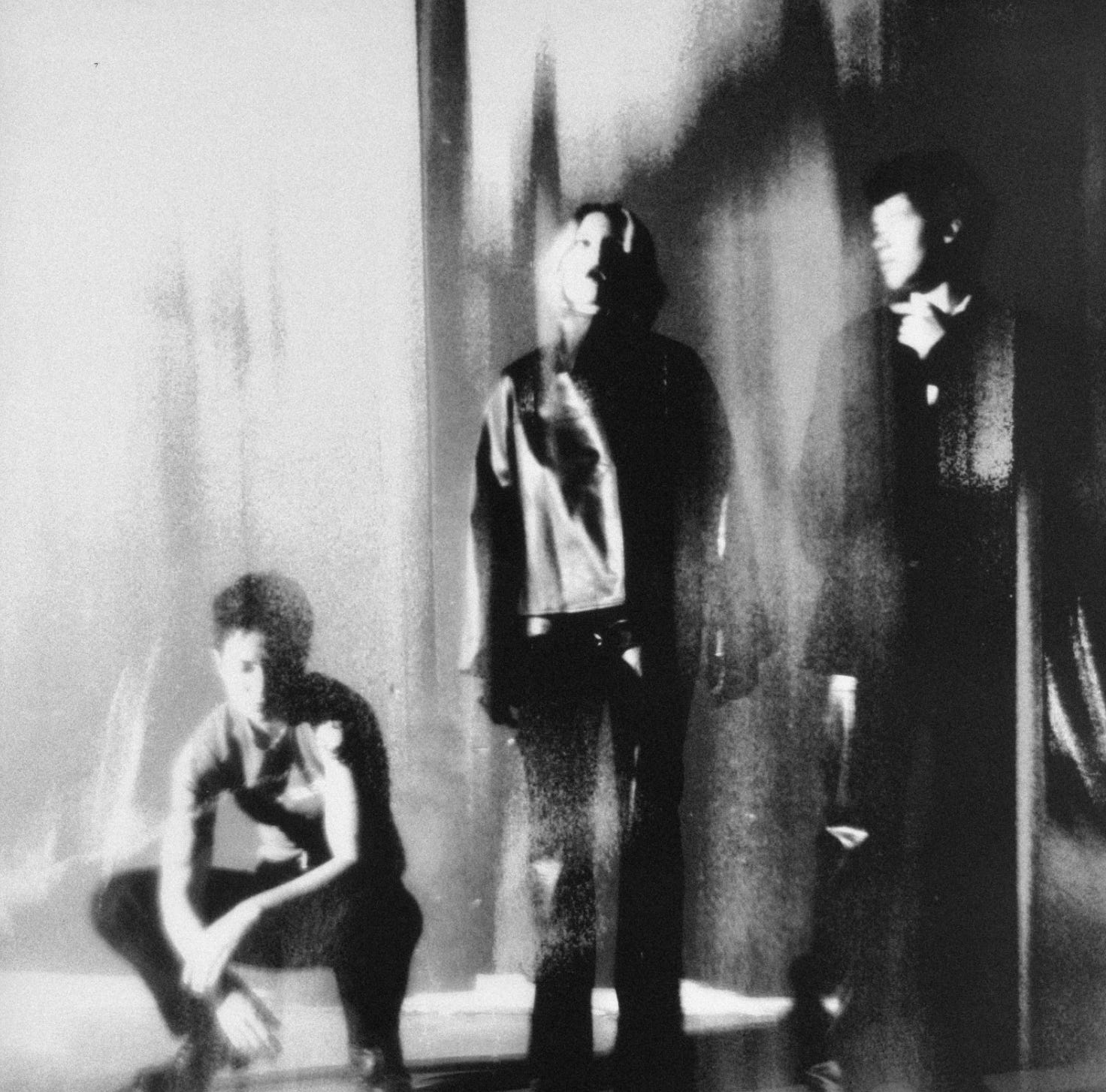
If you look at the lyrics on paper, So What reads as simple, perhaps overly so. What stands out about the words is what doesn’t; they’re plain and uncomplicated, without a lot of room for metaphor or double-meaning. Take the first verse, for example:
The party, the premiere,
the opening, I get invited.
The party, the black dress,
MM6, it’s all included.
Easy; unembellished and unassuming. But because Katie Gavin is undeniably a poet and has written some of my all-time favorite lines about baby lizards and intergenerational healing, it’s safe to say there’s probably more here. When a known wordsmith takes a marked turn away from figurative language, my ears perk right up.
As written on the page, the lyrics in the pre-chorus and chorus flow into each other in a way that makes sense, but when they’re sung, the choppiness adds new layers of meaning. Clauses are broken apart with unexpected punctuation or strung together in different, subtle combinations. Most obviously, the pre-chorus ends with the line “lots of people”, which could go right into the first line of the chorus, making it say “lots of people love me”. Then almost immediately after, we have this other, darker voice chiming in, saying “so what, if you don’t?”.
Even more significant, Katie’s singing punctuates the middle of that line, which turns the “love me” into something like an invocation, a plea. Love me. Is there anything more vulnerable than standing in front of someone with your bleeding heart in your hands, asking them to love you?
The linguistic simplicity is only enhanced by its repetition: lots of people love me, so what if you don’t. Like if I say it enough, maybe it will come true. If I say it enough, maybe I’ll finally believe it.
By keeping the language so bare-bones, MUNA opens up space to play around with cadence, order, and flow. In contrast, Dancing on the Wall—the lead single from the forthcoming album—shimmers with double meaning, evoking imagery of a lonely high school dance, being alone in a crowded room, trying to get through someone’s emotional walls and get them to pick up the phone, banging your head against a wall over and over. It’s detailed, visual, and rife with wordplay and double meanings. On the surface, So What is much less layered, but that only makes it more gut-wrenching.
There is something so uniquely devastating about having all of this success, standing in a room full of people, and still thinking about the one person who isn’t there. In all this sound, somehow all we hear is absence. Sure, they can say they won’t even notice the person who’s missing, but of course they do; they wrote a whole song about it (which like, same, girl).
This ever-elusive hope that a certain level success might fill the void also offers such a beautiful, eviscerating callback to If U Love Me Now, a song off of their first album that came out almost a decade ago, that asks if anyone ever “feels truly happy because of all that they have done”. Now, nine years after About U was released, MUNA’s career has taken off. They’re selling out huge venues; they’re opening for Taylor Swift; they’re somehow getting hotter by the day; they’re in rooms I can only imagine they previously only dreamed of. And still, they’re fixated on the love that isn’t there, still singing about wanting to be loved by someone who can’t, or won’t, or doesn’t, even as more and more people do.
In my limited experience, that’s one of the worst things about being in any type of situationship: every successful, should-be-joyful moment is tainted. The only thing worse than being miserable is being miserable while everyone is telling you, “you must be so happy!”. It’s one of the loneliest feelings I know, pretending to be happy when you’re devastated.
Adding to the small-yet-mighty lyrical shifts, in the final post-chorus before the build, the if gets blurred, truncated, or sometimes, cut off completely. Without it, the line loses its inherent possibility: maybe you love me, maybe you don’t. Now, after all this repetition, it lands as a more definitive statement: you don’t love me.
This brings us to the build at the end of the song, which marks a clear turn. As the tempo picks up, it sounds like we’re building to a big drop and maybe a final, anthemic chorus. There’s still a chance we might land somewhere empowered and inspired, a la the final chorus of Avril Lavigne’s Sk8r Boi (bet you didn’t see that comparison coming!). But instead? The song just ends. It builds and builds and builds until... nothing.
When I listened for the first time in the car this morning, the song ended and I just sat there for a solid three minutes, at my destination but unable to move. Somehow, the emptiness seemed to crescendo around me, a silence more stark than any noise. In the end, all we’re left with is this inevitable, suspended soundlessness; no volta, no solution, no final chord offering resolution. It invokes a crushing lack of closure familiar to so many of us who’ve had our hearts broken in this ambiguous, amorphous way. Sometimes, the people we want to love us just... don’t. Sometimes, we get where we always wanted to go only to feel lonelier than before. Sometimes, all we get is an abrupt ending where we used to see possibility, what’s not there ringing louder than everything that is.
TL;DR I might be insufferable on May 8th (when the full album comes out)!
xoxo,
Em
P.S. Hi! It’s been a minute! Thank you to the paid subscribers who have stuck around despite me not holding up my end of the deal. Monetizing ~art~ while the world implodes is one of my least favorite things, and I really appreciate the generosity of not just your dollars but also your attention. I’m glad you’re here.
MUNA FOREVER AND EVER. This song gutted me fr, I was nodding and amen-ing reading your analysis, and we’ll both be insufferable when this album comes out. 🫡
I want 1000000 words of muna textual analysis from you tysm!! Going to relisten to the song now!